

Table of Contents
- What Makes a Dog Harness Escape-Proof
- Step-In vs Overhead Dog Harness: Which Stops Escapes
- How to Measure Your Dog for a Harness
- How to Stop Your Dog From Backing Out of a Harness
- Key Features for High-Flight-Risk Dogs
- Maintenance and Wear-and-Tear Inspection
- Behavioral Training Integration With Your Harness
- Frequently Asked Questions
Last Updated: October 2, 2026
What Makes a Dog Harness Escape-Proof
The best dog harness for escape artists combines three critical elements: a back-out proof design that prevents your dog from slipping backward, secure hardware that can't be forced open, and an adjustable fit that leaves no room for wiggling. The difference between a harness that works and one your dog escapes from often comes down to how these components interact.

The most effective escape-proof harnesses use a three-point security system. This means the harness connects at three separate points on your dog's body: the chest, the belly, and often the back. A standard single-point harness only secures at one location, which gives an escape artist multiple opportunities to maneuver free. When all three attachment points are snug and properly fitted, your dog has nowhere to go.
Back-out proof design is where most harnesses fail. A dog can slip backward out of a poorly designed harness by arching their back and reversing out of the straps. The best harnesses prevent this with a snug chest plate that sits high on the front of the body and a belly strap positioned low enough that the dog can't create the use needed to escape.
Back-out proof design and three-point security
Your dog's anatomy works against you here. Most dogs can compress their shoulders and torso to slip backward if the chest plate sits too high or too loose. A properly designed harness has a padded chest plate that sits at mid-chest height, creating a barrier that's difficult to slip past. The belly strap then locks the harness in place from below, eliminating the back-out escape route entirely.
Three-point harnesses distribute pressure evenly across the chest, sides, and belly. This design is borrowed from tactical and working dog harnesses, where failure isn't an option. The d-ring placement matters too, a well-positioned d-ring on the back of the harness gives you a control point without putting all the leash tension on the front, which can encourage pulling.
Hardware quality and tensile strength
The buckles and attachment points on your harness need to withstand serious force. A panicked escape artist can generate surprising amounts of pressure trying to break free. Look for harnesses with military-grade hardware that's rated for high tensile strength. Plastic buckles will fail under sustained pressure; quality metal or reinforced polymer hardware won't.
Stitching matters as much as the hardware itself. The seams where straps attach to the main body are stress points. Poor stitching will separate under the kind of pulling and twisting an escape artist throws at a harness. Reinforced stitching, ideally with multiple passes, keeps the harness intact even when your dog is doing everything they can to get out of it.
Step-In vs Overhead Dog Harness: Which Stops Escapes
The choice between step-in and overhead harnesses significantly affects how secure your dog actually is. Step-in harnesses require your dog to step into the front loops while you secure the back, while overhead harnesses slip over your dog's head like a shirt. For escape artists, the design difference matters more than most people realize.
Overhead harnesses are generally more secure for high-flight-risk dogs. Because the harness goes over the head first, there's no opportunity for your dog to back out before you've secured all the straps. Step-in harnesses require your dog to cooperate during the fitting process, and escape artists are notorious for refusing to step into the front loops or wiggling free before you've tightened everything down.
That said, overhead harnesses have a trade-off: they can be harder to put on anxious dogs who resist anything going over their head. If your dog has anxiety-induced escape behavior, the stress of putting on an overhead harness might trigger the very behavior you're trying to prevent. Step-in harnesses work better for dogs with genuine anxiety, provided you have the adjustability to make them truly snug.
The Military Tactical Dog Harness with Handle & Reflective Straps from WiggyButts Adventure Co. uses an overhead design with a top-mounted handle, giving you both security and control. The reflective straps add visibility for low-light hiking, and the adjustable fit across chest and belly means you can achieve that critical snug fit that prevents backing out.

How to Measure Your Dog for a Harness
Proper measurement is non-negotiable. A harness that's even slightly too loose won't prevent escapes, and one that's too tight will cause chafing and discomfort. Most fitting failures come from guessing at size rather than taking actual measurements.
Girth measurement and adjustable fit
Measure your dog's chest girth at the widest point, just behind the front legs. Use a soft measuring tape and pull it snug, not tight, but snug enough that you can't slide a finger under it easily. This measurement determines your base size. Then measure your dog's belly girth at the point where a belly strap would sit, typically a few inches behind the front legs.
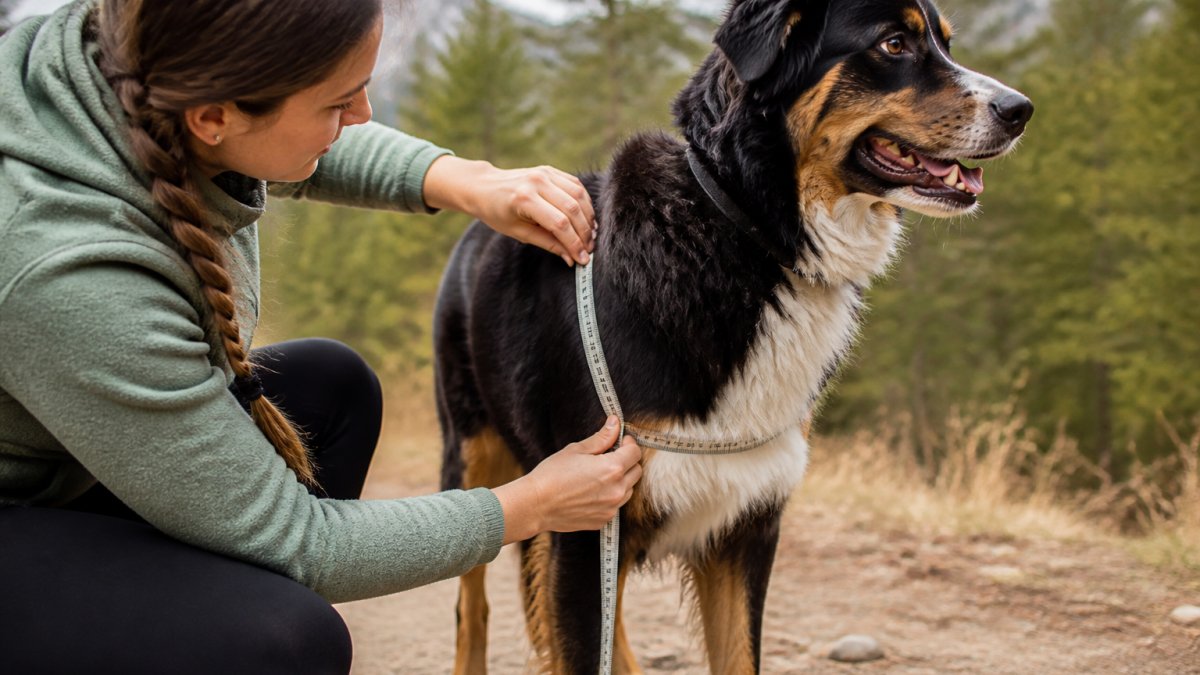
Write down both measurements and compare them to the size chart. Most quality harnesses offer adjustability across at least two points, chest and belly. This is critical for escape-proof fit. A harness with only one adjustment point will either be too loose at the belly or too tight at the chest. Adjustable fit lets you dial in the perfect snug without sacrificing comfort.
Don't rely on your dog's weight alone. Two 30-kilogram dogs can have completely different body shapes. One might be a lean athletic dog with a narrow chest, while another is a stocky, barrel-chested breed. Girth measurements account for this variation in a way weight never will.
Military Tactical Dog Harness with Handle & Reflective Straps →
How to Stop Your Dog From Backing Out of a Harness
If your dog is already escaping from their current harness, the problem is almost certainly fit or design. Before you buy a new harness, diagnose why the current one isn't working.
Proper fitment and the belly strap advantage
The single most common reason dogs back out of harnesses is that the belly strap is either missing or positioned too high. A belly strap that sits low, roughly where the dog's abdomen meets the back legs, creates the use point that prevents backward escape. Without it, a dog can arch their back and slip free.
When you put the harness on, tighten the chest first, then the belly. The belly strap should be snug enough that you can't slide more than one finger under it. This is the difference between a harness that holds and one your dog escapes from. Many owners over-tighten the chest and under-tighten the belly, which is exactly backward for escape prevention.
Test the fit by trying to slide your fingers under the harness at multiple points. At the chest, you should fit one finger. At the belly, also one finger. If you can fit two fingers anywhere, it's too loose. If you can't fit any fingers, it might be too tight, though for escape artists, snug is better than loose.
Key Features for High-Flight-Risk Dogs
Beyond the basic escape-proof design, certain features become essential when you're dealing with a dog that's genuinely committed to getting out. Reflective visibility, padded construction, and proper d-ring placement all contribute to a harness that's both secure and safe for serious outdoor use.
Reflective visibility, padded chest plate, and d-ring placement
Reflective stitching or straps aren't just about looking good, they're safety equipment. If your dog does manage to escape during a hike or outdoor activity, reflective gear makes them visible to vehicles and helps you locate them in low light. Look for harnesses with reflective material on multiple straps, not just one.
A padded chest plate protects your dog's front from chafing and impact. During intense pulling or when you're using the harness to assist your dog over obstacles, padding absorbs pressure and prevents the kind of rubbing that creates sores. Tactical harnesses often include this feature because they're designed for working dogs in demanding conditions.
The d-ring placement affects both control and comfort.
Maintenance and Wear-and-Tear Inspection
A harness that's escape-proof today might not be escape-proof six months from now if you're not inspecting it regularly. Wear, UV damage, and material degradation happen faster than most people expect, especially on harnesses used for serious outdoor activities.
Behavioral Training Integration With Your Harness
A harness is a tool, not a solution on its own. The most effective approach combines escape-proof harness design with behavioral training that reduces your dog's motivation to escape in the first place.
Frequently Asked Questions
What makes a dog harness truly escape-proof?
An escape-proof harness combines a three-point security system (chest, belly, and back attachment points), a padded chest plate that prevents slipping, and a belly strap that closes tightly to eliminate back-out risk. Quality hardware with high tensile strength, secure d-ring attachment points, and nylon webbing construction ensure structural integrity under pulling pressure. Proper fitment is equally critical, a harness that's too loose will fail regardless of design.
How do I know if a step-in or overhead harness is better for my escape artist dog?
Step-in harnesses offer easier on-and-off convenience and work well for dogs with anxiety-induced escape tendencies, as they minimize head pressure. Overhead harnesses provide tighter security around the neck and shoulders, making back-out nearly impossible, ideal for high-flight-risk dogs. For true escape artists, overhead or tactical designs with a belly strap deliver superior safety redundancy. Consider your dog's behavior: if they panic when putting on gear, step-in may reduce anxiety; if they're determined to slip free, overhead with a belly strap is the safer choice.
What should I inspect regularly to keep my harness escape-proof?
Check the belly strap and chest plate monthly for wear, fraying, or stretching. Inspect all d-rings, quick-release buckles, and security hardware for corrosion or looseness. Look for nylon webbing damage, especially at stress points where the leash attaches. Test the fit by sliding two fingers under the chest and belly straps, if they move more than that, tightening is needed. Replace the harness if you notice tears, broken stitching, or hardware failure.
Can behavioral training work alongside a secure harness?
Yes, a secure harness and positive reinforcement training work together. While a back-out-proof harness prevents physical escape, training teaches your dog that staying calm and walking beside you brings rewards. Use the harness during leash training sessions to build confidence without escape anxiety. Pair secure gear with consistent, reward-based commands so your dog learns to trust the harness rather than fear or fight it. This combination is especially effective for reactive dogs or those with anxiety-induced escape behavior.